12 Key Fitting Specifications
A structured reference to the principal specifications involved in matching a golf club to a golfer.
Read PDF →

Modern launch monitors provide extraordinary information, but real club fitting is broader than a data session. It begins with the golfer: physical measurements, current equipment, ball flight, goals and playing experience. Technology enhances that process; it does not replace it.

Club fitting is the process of matching the golf club to the golfer. The objective is not simply to identify a popular model or the club that produces one impressive launch-monitor number. Length, lie, loft, shaft, grip, head design, total weight and swingweight all work together. A successful fit creates a set of specifications the golfer can use naturally and repeatably.

Think of golf clubs like shoes. The newest or most expensive shoe does not help if it is two sizes too large. Golf clubs work the same way. Before choosing the product, establish what actually fits the golfer. Physical dimensions, strength, flexibility, age, injuries, current ability, miss pattern, preferred ball flight and improvement goals all provide information that equipment specifications alone cannot.

The measured fit creates the physical foundation of the club. Height and wrist-to-floor measurements help establish a starting point for length. Grip sizing affects how the player holds and controls the club. Lie and loft affect geometry, trajectory and direction. Swingweight and total weight influence how the club feels and moves. These measurements are not decorative specifications on a build sheet—they determine whether the club physically fits the golfer.
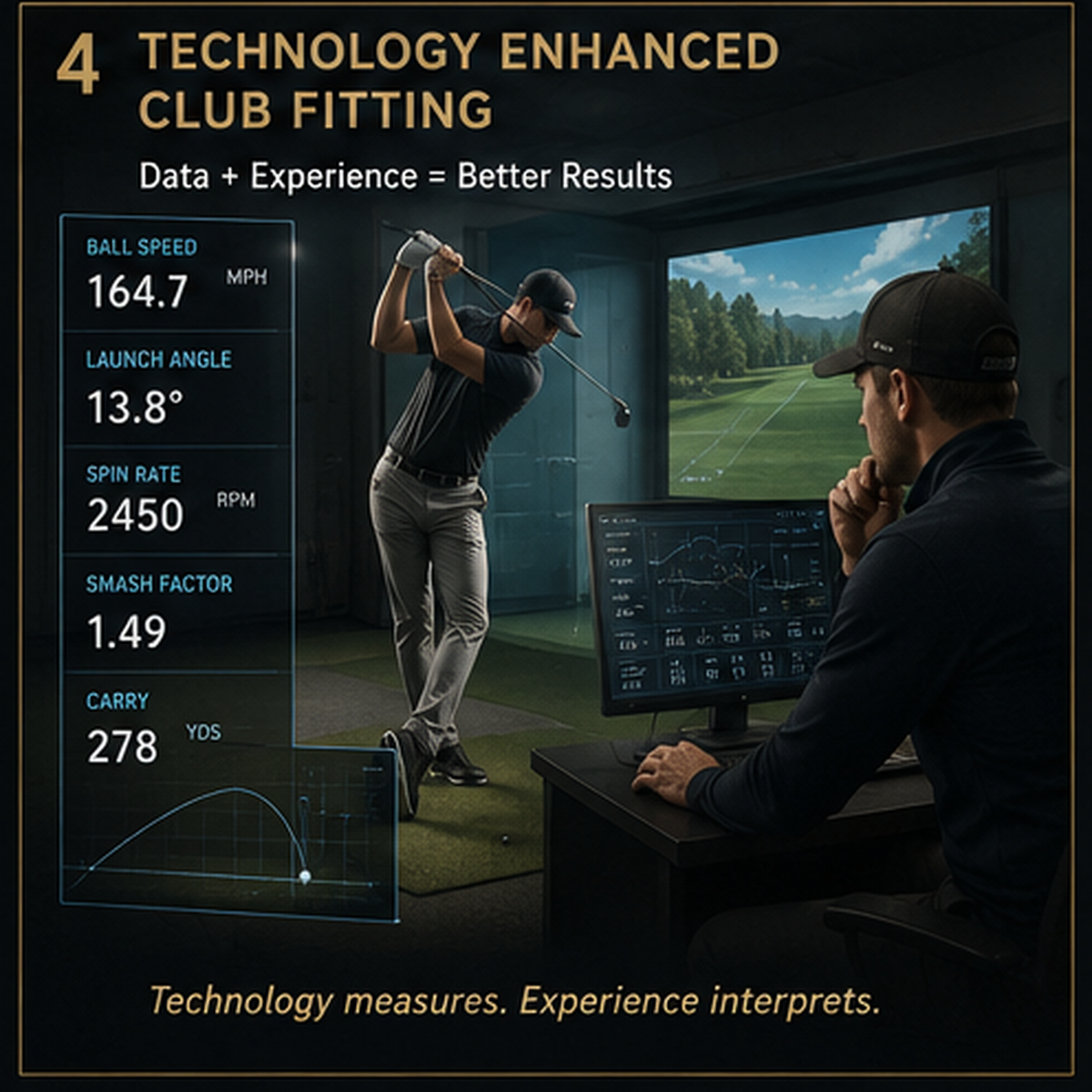
Club fitting existed long before launch monitors. Experienced clubmakers relied on measurements, observation, ball flight, golfer feedback and knowledge of equipment. Modern launch monitors dramatically improve the process by adding precise objective data such as club speed, ball speed, launch angle, spin, carry and smash factor. A launch monitor measures what happened. A fitter still has to interpret why it happened and decide what equipment changes are appropriate.

A launch-monitor bay is an excellent controlled test environment. It provides repeatable conditions and detailed data. Golf, however, is played on a course: wind changes, lies change, fatigue changes, pressure changes and no two shots are exactly alike. Controlled testing helps identify equipment characteristics; real golf confirms whether those characteristics actually help the player perform. The best fitting philosophy respects both.

TSH Golf starts with Tell Us About Your Game: what you play now, what you are trying to improve, your normal ball flight, physical considerations and the way you play. Measurements establish the starting specifications. Current equipment, swing video and launch data can add useful information when available. From there, the head, shaft, length, lie, loft, grip and weighting are selected as a complete system. The finished build is documented in a final blueprint so the specifications are known and repeatable.
20 actual fitting resources from the uploaded Technical Library, presented as a curated reference collection.
A structured reference to the principal specifications involved in matching a golf club to a golfer.
Read PDF →Focuses on playing length as a foundational fitting specification and why stock length is not automatically correct.
Read PDF →Explores why fitting can be especially valuable for golfers who need equipment to reduce the effect of inconsistent contact or swing patterns.
Read PDF →A broad overview of the value of fitting equipment to the golfer rather than relying only on stock specifications.
Read PDF →Reviews common distance assumptions and the fitting variables that influence driver performance.
Read PDF →A quick reference for typical club distances and performance expectations.
Read PDF →Explains how adjustable hosels change club settings and how those changes affect fitting choices.
Read PDF →A deep reference on shaft standardization, materials, OEM practices, and fitting implications.
Read PDF →A practical guide to evaluating lie angle as part of the fitting process.
Read PDF →Step-by-step guidance for measuring playing length consistently.
Read PDF →Explains moment of inertia as an equipment concept that can influence stability and fitting decisions.
Read PDF →Addresses common misconceptions about custom fitting and how golfers evaluate equipment.
Read PDF →Explains why putter specifications deserve the same fitting attention as the rest of the set.
Read PDF →Introduces shaft selection as one component of the complete fitting process.
Read PDF →Reference chart for using wrist-to-floor and height measurements as fitting starting points.
Read PDF →General fitting reference material from the TSH Golf library.
Read PDF →A compact visual fitting reference for golfers who want the key ideas at a glance.
Read PDF →Quick-reference chart supporting the shaft-selection portion of the fitting process.
Read PDF →TSH Golf reference used to narrow shaft choices from golfer and swing information.
Read PDF →The interview framework used to gather the golfer information that comes before equipment recommendations.
Read PDF →Tell TSH Golf about your current equipment, normal ball flight, measurements and what you are trying to improve. That information is the starting point for every recommendation.
Contact TSH Golf →
Standard products are available for convenient online ordering.
Shop Our eBay Store →